





Who is the target audience for Black Swan, a ballet movie with more grisly violence than Saw III? Older viewers who swooned over The Red Shoes and The Turning Point will be repelled by the slashings and gougings, whereas kids who groove to blood and gore will not automatically be drawn to a story filled with tutus and pirouettes. If Darren Aronofsky’s film accomplishes nothing else—and believe me, it accomplishes almost nothing else—perhaps it will introduce some bloodthirsty teenagers to the rigors of dance and the rousing strains of Tchaikovsky. But this misconceived stew of high and low aspirations hardly merits the Oscar buzz it is generating.
The film chronicles the mental breakdown of Nina (the talented Natalie Portman), a fragile, disturbed dancer who is hoping to snare the leading role in a new production of Swan Lake. Tchaikovsky’s ballet concerns two characters—the pure White Swan and the evil Black Swan—and as Nina tries to incarnate these two opposite figures, she experiences her own offstage war between her sensitive side and a more violent, deranged persona. While dance aficionados may recognize motifs from other ballet films, the movie that Black Swan most closely resembles is Roman Polanski’s early horror film, Repulsion, the story of a repressed, beautiful young woman who begins seeing visions that eventually drive her to murder and madness. But Polanski worked with a sly, deft touch that eludes the ham-fisted Aronofsky.
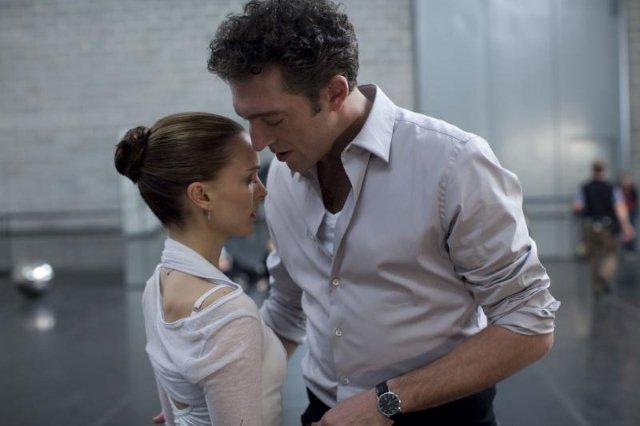
The story concocted by Aronofsky and screenwriters Mark Heyman, Andres Heinz, and John McLaughlin resurrects almost every cliché about the hothouse worlds of theater and dance. The movie trots out a simplistic Freudian explanation for Nina’s disorder; she has a ferociously overprotective stage mother (an unflatteringly photographed Barbara Hershey) driving her toward perfection. The director of the company (Vincent Cassel) goads her to achieve new artistic heights by alternately belittling and seducing her. While it may be true that choreographers like George Balanchine often were romantically linked with their prima ballerinas, it’s dubious whether they groped the dancers as blatantly as Cassel assaults poor, bewildered Nina.
As if she didn’t have enough problems, Nina also has to contend with another young dancer, Lily (Mila Kunis), who may or may not be an Eve Harrington trying to usurp the starring role for herself. Nina succumbs to twisted homoerotic fantasies in which she imagines herself lustfully embracing or sadistically stabbing the rivalrous Lily. All of this psychosexual chaos seems to be making the point that an artist who strives for excellence is destined to implode. Dancers are particularly rigorous and driven artists, but they are also highly disciplined and probably no more prone to self-destructive impulses than most of the rest of us. Black Swan presents an awfully retrograde, unconvincing notion of a woman unhinged by her own aspirations.
The best you can say about the movie is that it isn’t boring. It’s directed in such a feverish, hyperactive style that it keeps you watching, and the final performance of Swan Lake presents a skillful blend of lush visual imagery and soaring music. Yet the bloody images that permeate the rest of the film are offputting rather than compelling. This whole fantasia of art and horror is so over-the-top that it frequently falls into unintended ludicrousness. A lot of talented people have expended a lot of effort on a crude, nonsensical portrait of the artist not as a visionary figure seeking transcendence but as a trembling psychopath heading toward the cuckoo’s nest.