
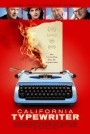
Those who haven’t adjusted ecstatically to all the wonders of modern technology will revel in the unorthodox and delightful documentary, California Typewriter, one of the major discoveries at last year’s Telluride Film Festival.
Director Doug Nichol told the audience in Telluride that he started out to make a documentary about a small, struggling typewriter repair shop in Berkeley, California. But the canvas gradually expanded to a rich and rewarding cinematic essay on what the demise of the typewriter might tell us about our changing civilization. Nichol found a remarkable array of famous and less familiar people to share their love of typewriters and their resistance to the relentless march of tablets and smartphones. One of the amusing contrasts in the film is a scene of crowds lining up hours in advance of the launch of the newest Apple product, juxtaposed to scenes inside the Mom-and-Pop California Typewriter shop in Berkeley.
Of course this yearning for older forms of technology is not limited to the typewriter. Fans of vinyl records and 35mm film also seem to be growing, and this movie aims to recognize the value in a machine that may have been thrown on the dustheap to satisfy the greed of new entrepreneurs. The film also discovers a surprising array of typewriter enthusiasts, including Tom Hanks, playwright and actor Sam Shepard, biographer David McCullough, and singer-songwriter John Mayer. As Shepard states succinctly, “I never got along with the computer screen,” and he adds that he gets a rush from seeing the ink flying on to the paper in front of him as he types and retypes a new play.
McCullough talks about the history that will be lost when we no longer have access to typed presidential speeches and the editing notes that are still visible on the margins of the paper. And Mayer talks about the inspiration he took from the movie Don’t Look Back, where he was able to watch Bob Dylan type the lyrics to his songs on a sheet of paper.
There are also some fascinating figures on camera who aren’t so well known. Martin Howard is a Canadian typewriter collector and historian, and he pays tribute to the 19th century inventor of the machine, Christopher Latham Sholes. He points out that one of Sholes’ motivations was the emancipation of women, who found a new form of livelihood as office typists. And Howard reminds us that the quirky keyboard designed for the typewriter by Sholes is still utilized by the mighty computer.
Another fascinating character we meet is sculptor Jeremy Mayer, who specializes in dismantling typewriters and creating inventive art objects out of all the discarded parts. Although this might seem to be a destructive exercise, Mayer speaks lovingly of all the useful and even elegant mechanical parts. (As he observes, it’s hard to imagine the interior of a computer ever serving that same creative purpose.)
But the main heroes of the film are probably Herbert Permillion III and his family members, along with repairman Ken Alexander, who own and manage California Typewriter. This is a small African-American business that cares about its few employees, and although Herb toyed with the idea of closing the store after his 70th birthday, it remains open for now, and his staff continues to work alongside him. They have more customers today than they did 10 or 15 years ago, both from people wanting to repair their typewriters or buy used machines in stock. The future is still uncertain, because the world’s last typewriter manufacturing plant, in India, recently closed. But the typewriter’s devotees seem determined to insure its future.
The film could probably use a bit more editing, and I wish that the people interviewed were identified with a title card before the end credits. But Nichol has created a loving valentine to all the iconoclasts who resist what the rest of the world defines as progress .
Bottom line: Eloquent tribute to a band of Luddites.