





I can think of a few movies that use voice-over narration effectively: The Magnificent Ambersons and Jules and Jim are two of my favorites, and I’m sure there are two or three others. But in most cases, the device seems like a desperate crutch. As storytelling skills have declined in recent years, the use of voice-over has exploded, with filmmakers floundering to fill plot holes and expository gaps. The use of voice-over is far more bizarre in Terrence Malick’s eagerly awaited—and wildly overpraised—new movie, The Tree of Life. Malick has used narration in earlier movies, most notably in Badlands and Days of Heaven, to create a voice for characters in the story. But Tree of Life has no story, and that’s why the voice-over feels weirdly distracting; it seems designed to provide a philosophical overlay that the rest of the movie hasn’t earned.
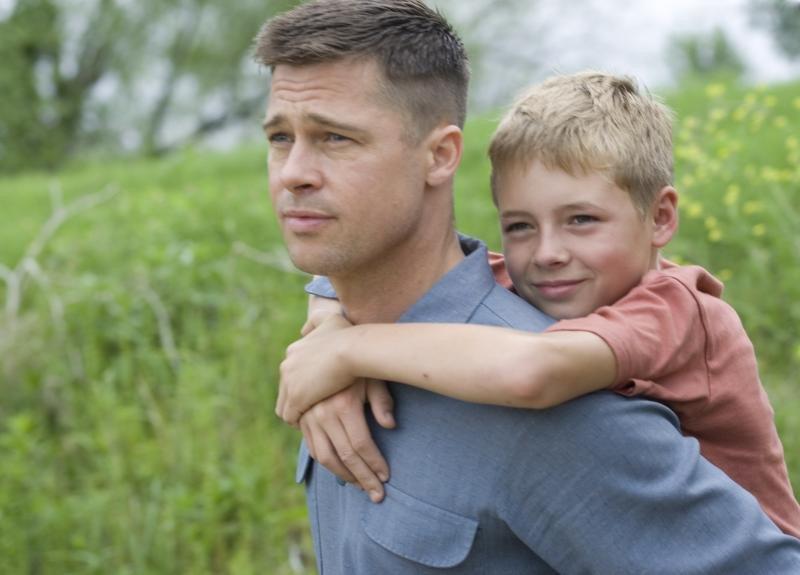
The film’s defenders regard it as an experiment in non-narrative cinema. But was this Malick’s intention, or has he merely failed to craft a coherent narrative? Near the beginning of the film, a telegram arrives, and we learn that one of the three sons of a Texas family has died. But it isn’t clear which of the sons has died, and we never learn the cause of death. What is the possible reason for this vagueness? What artistic imperative demanded such maddening murkiness? The whole movie is an exercise in hushed, pointlessly elliptical storytelling. Eventually we seize a few glimmers of characterization: The father in the family (Brad Pitt) is a failed inventor who takes out his disappointments on his three children, especially on the oldest and most rebellious son (played by Hunter McCracken as a child and by Sean Penn as an adult). No doubt this father-son conflict resonates in a lot of families, but to me the lack of specificity is not a sign of innovative cinema; it is a simple and resounding failure of dramatic imagination.
There are lovely images in the film, and the evocation of day-to-day family life is sometimes flavorful. One key sequence in which the family is forced to leave their home is unmistakably poignant. Grafted onto this intermittently touching family drama is a larger metaphysical speculation on humanity’s place in the cosmos. Interspersed somewhere in the middle of the picture is a lengthy sequence dramatizing the creation of the universe (complete with dinosaurs), which is probably meant to prefigure a concluding sequence in which the grown-up son played by Penn visits a heavenly realm where the living and the dead commingle. Malick employed special effects wizard Douglas Trumbull, who created the ground-breaking effects for Stanley Kubrick’s 2001: A Space Odyssey, to work on these sequences, and they are technically impressive and fun to watch. But not even the most zonked of the director’s worshippers will be able to explain why these trippy effects are any more relevant to this movie than they would be to two dozen others, chosen at random.
Badlands, made in 1973, was the last Malick movie that provided meaty roles for actors. He is clearly less interested in the dramatic interplay of vivid characters than he is in creating striking visual tableaux, as he did most memorably in Days of Heaven. In Tree of Life Pitt does convey the fierceness and frustration of a failed father, but the lovely Jessica Chastain has been given too little material to create a character. And Penn’s role is so truncated that his appearance in the film is almost a joke. (A longer cut reportedly exists that gives Penn more screen time.) Give high marks to the cinematography (by Emmanuel Lubezki) and to the art direction (by Malick’s frequent collaborator, Jack Fisk), yet this 138-minute tone poem is a very long sit. After reading the rave reviews, some bewildered or disappointed viewers might be tempted to declare that this emperor has no clothes. That would not be an entirely fair assessment, but the monarch’s robes are definitely tattered.